
AutoCFD5 workshop agenda
Two-day programme for AutoCFD5 in Bologna on 8–9 October 2026.
Workshop programme
Presentation materials DAMA Technopole, Bologna, Italy
All times are in Central European Summer Time (CEST).
Browse talks and summaries in the AutoCFD5 presentation library. PDF slides are being added as they become available. Video recordings will follow.
Day 1 Thursday 8 October 2026
Morning programme
Welcome and workshop introduction
Registration at the welcome desk
Opening remarks and workshop statistics
Simone Bnà & Neil Ashton
Summary of Workshop Series and Introduction to AutoCFD5 Case 1 and 2
Gary Page & Burkhard Hupertz
Meshing Technology Focus Group
Meshing TFG Context and Summary
Chair: Vangelis Skaperdas
Effect of Turbulence Modeling and Automatic Mesh Refinement on the External Aerodynamics of Automobiles
CNRS / Centrale Nantes
Additional Mesh Coarsening Approaches and Their Effects
Multimatic
Automated Parallel Hex-Dominant Volume Mesh Generation for the DrivAer Notchback Using ChopMesh
Voxshell
Coffee
Scale Resolving Simulation Technology Focus Group
Scale Resolving Simulation TFG Context and Summary
Chair: Charlie Mockett
High Order Spectral Element Method DrivAer
Barcelona Supercomputing Center
Effect of time-step and grid refinement on DDES approach on flow topology and separation behaviour for the DrivAer model
Bramble CFD
Evaluation of Hybrid RANS–LES Scale-Resolving Simulations for the DrivAer Notchback Configuration
ENGYS
Towards Fast and Accurate DrivAer Simulations
Flexcompute
Effect of LES model on the onset of separation
KM Turbulenz
Lunch
Afternoon programme
Scale Resolving Simulation presentations
Assessment of the open-source CFD code code_saturne on the AutoCFD workshop cases: from steady RANS to hybrid RANS-LES
Simvia / EDF Group
Investigation of the Effect of Targeted Octree Mesh Refinement on WFLES and SBES solutions for the DrivAer Notchback Configuration
Synopsys
The Role of Numerical Scheme Accuracy in WMLES of the Aerodynamics of the Windsor Body
Universitas Mercatorum
Scale-resolving OpenFOAM simulations of the DrivAer case 2 using a novel family of dynamic RANS closures
University of Modena and Reggio Emilia
Volcano ScaLES Results for AutoCFD5 Cases
Volcano Platforms
Coffee
High Performance Computing Technology Focus Group
HPC TFG Context and Summary
Chair: Herbert Owen
GPU-Accelerated Scale Resolving Simulations for AutoCFD5 on Fixed and Adaptive Octrees
Institute for Advanced Study, Beijing Normal-Hong Kong Baptist University
Detailed comparison of performance and quality between GPU and CPU simulations with OpenFOAM
Upstream CFD
Day 2 Friday 9 October 2026
Morning programme
Welcome back and announcements
Registration at the welcome desk
Day 1 recap and announcements
Noise Factors Technology Focus Group
Noise Factors TFG Context and Summary
Chair: Burkhard Hupertz
Pacefish's LBM-based GPU-native CFD
Numeric Systems
Quantification of uncertainties from mesh approaches and hardware architecture using PowerFLOW and DrivAer model
Dassault Systèmes
Using Ensemble Averaging to Accelerate Uncertainty Quantification in Automotive Aerodynamics Simulations
Ford Motor Company
Towards Multi-Factor Noise Assessment in Automotive CFD Using Design of Experiments
ICON
Ensemble Averaging Method for Efficient Transient Simulations of External Automotive Aerodynamics
Škoda Auto
Quantifying Noise Factors: Sampling Length and CrossSolver Uncertainty Analysis
Škoda Auto
Coffee
Revisiting DrivAer Aerodynamics: Updated results integrating Noise Factors and AI
Siemens Digital Industries Software
AI/ML Technology Focus Group
AI/ML TFG context, datasets and summary
Chairs: Neil Ashton & Astrid Walle
Mistral DrivAerML results using AB-UPT
Mistral
Impact of Input Quantities on Aerodynamic Predictions Using Geometric Deep Learning
Cadence
IngeniNetSim: Fast and Scalable Geometric Deep Learning for DrivAerML Aerodynamic Prediction
IngeniAI
Spatially Smooth Multi-Granularity Conformal Prediction for Reliable Automotive Aerodynamic Surrogate Modeling
KIT
Lunch
Afternoon programme and close
AI/ML presentations
Trustworthy AI Surrogates for DrivAerML: Cross-Architecture Evaluation, Data-Source Ablation, and Calibrated Uncertainty Quantification
Luminary AI
Single-Pass versus Sequential Multi-Field Prediction with the Courant Neural Surrogate for the DrivAer Case
Pasteur Labs
Data-Centric Large Physics Models for Automotive Aerodynamics: From Architecture to Scalable Training Data
PhysicsX
Panel discussions and workshop close
OEM Panel Discussion
TFG Lead Panel Discussion
Summary, Closing Remarks and Future Workshop Discussions
New case proposal: Gary Page — NWTF automotive reference models
View new case proposal (PDF) Close of Workshop
Evening programme
Social programme venues
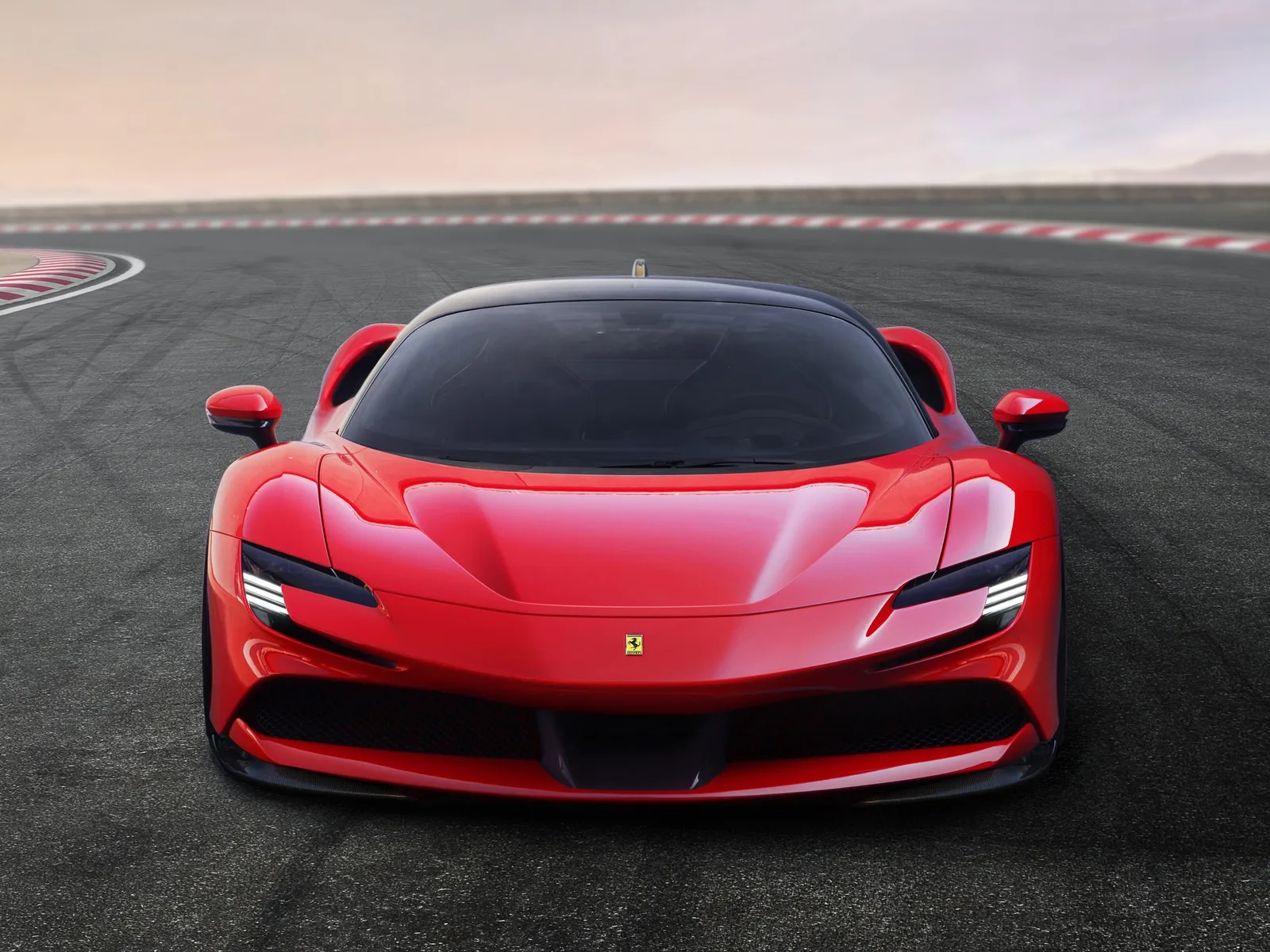
Museo Enzo Ferrari Modena
Explore the spectacular futuristic pavilion dedicated to the life and sports cars of Enzo Ferrari in nearby Modena.
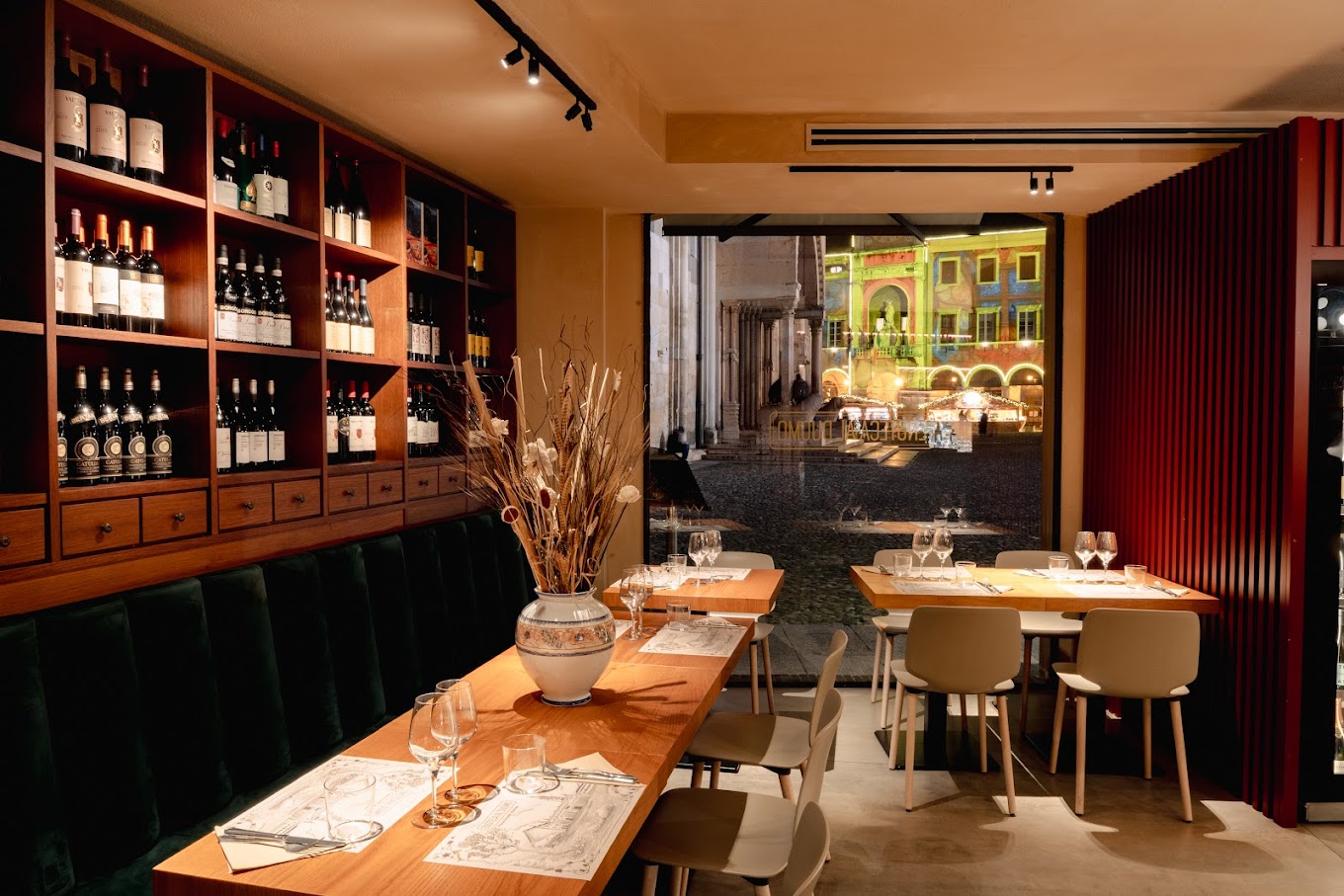
Enoteca al Duomo
Enjoy a traditional dinner and regional Emilian wines situated in the historical heart of Modena's city center.